
On this page
- 1Planning Umrah with elderly parents: start with a conversation
- 2See the doctor 6 to 8 weeks before
- 3Medicines and medical papers
- 4Choosing the package and the hotel
- 5Wheelchair help at the airport
- 6Wheelchairs and carts in the Haram
- 7A gentle daily pace
- 8Heat, water and food
- 9Who stays with them
- 10Questions
Key points
- See the doctor 6 to 8 weeks before travel, and carry every medicine with its prescription in the cabin bag.
- Ask for airport wheelchair help when the ticket is booked: at Mumbai and Jeddah, for both flights.
- Wheelchairs and carts are available in the Haram, but the services and charges change, so check on arrival.
- Plan around the slowest walker: rest days, calmer times for tawaf, and one family member who always stays with each parent.
- Most families with elderly parents find the 20-day package easier, because the extra nights are all in Makkah.
Planning Umrah with elderly parents: start with a conversation
Umrah with elderly parents is something many families plan for years, and for many parents it is the trip they have prayed for. It needs a little more planning than a trip for young travellers. The rites involve walking, standing and crowds, often in heat, and the travel days are long.
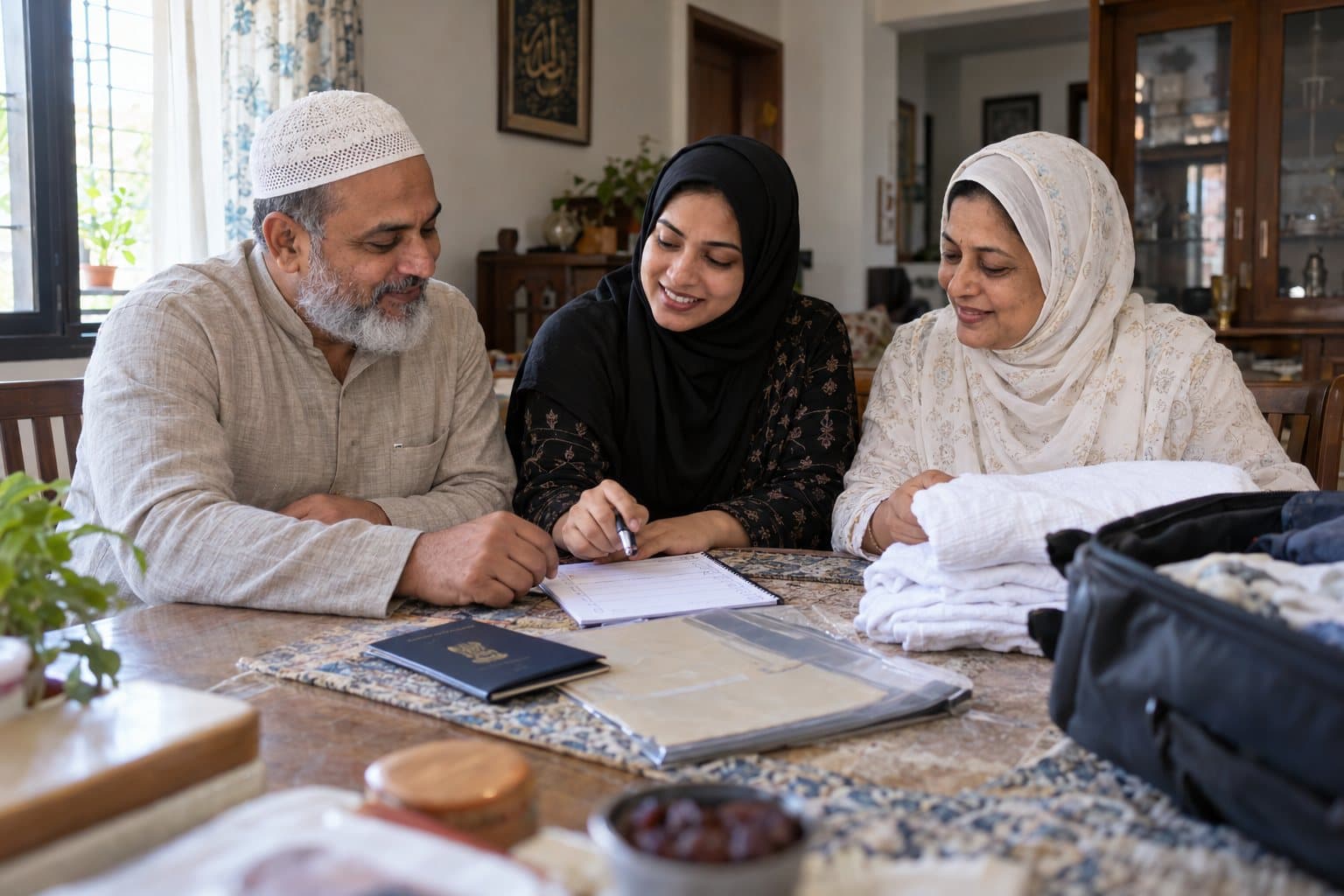
Before you choose dates, sit with your parents and ask a few honest questions:
- How far can they walk before they need to sit?
- Can they manage stairs and the steps of a coach?
- Do they get breathless, dizzy or confused in heat or crowds?
- Do they need help in the bathroom, or at night?
- What worries them most about the trip?
A parent who walks slowly can still perform a full Umrah. Plan around their pace, not the fittest person’s.
See the doctor 6 to 8 weeks before
Ask your parents to start a short walk every day now, and build it up slowly. Even 15 to 20 minutes a day makes the first days in Makkah easier.
Book a check-up for each parent well before travel, especially if they have diabetes, blood pressure, or heart, kidney, lung or joint problems. Tell the doctor about the long flight, the heat and the daily walking, and ask:
- Are they fit for the flight and for daily walking in heat?
- Should any medicine timings change on the travel day?
- What should we do if sugar or blood pressure goes too high or too low?
- Which vaccines do they need for this season?
- Do they need a letter for any medicine, injection or medical device?
Medicines and medical papers
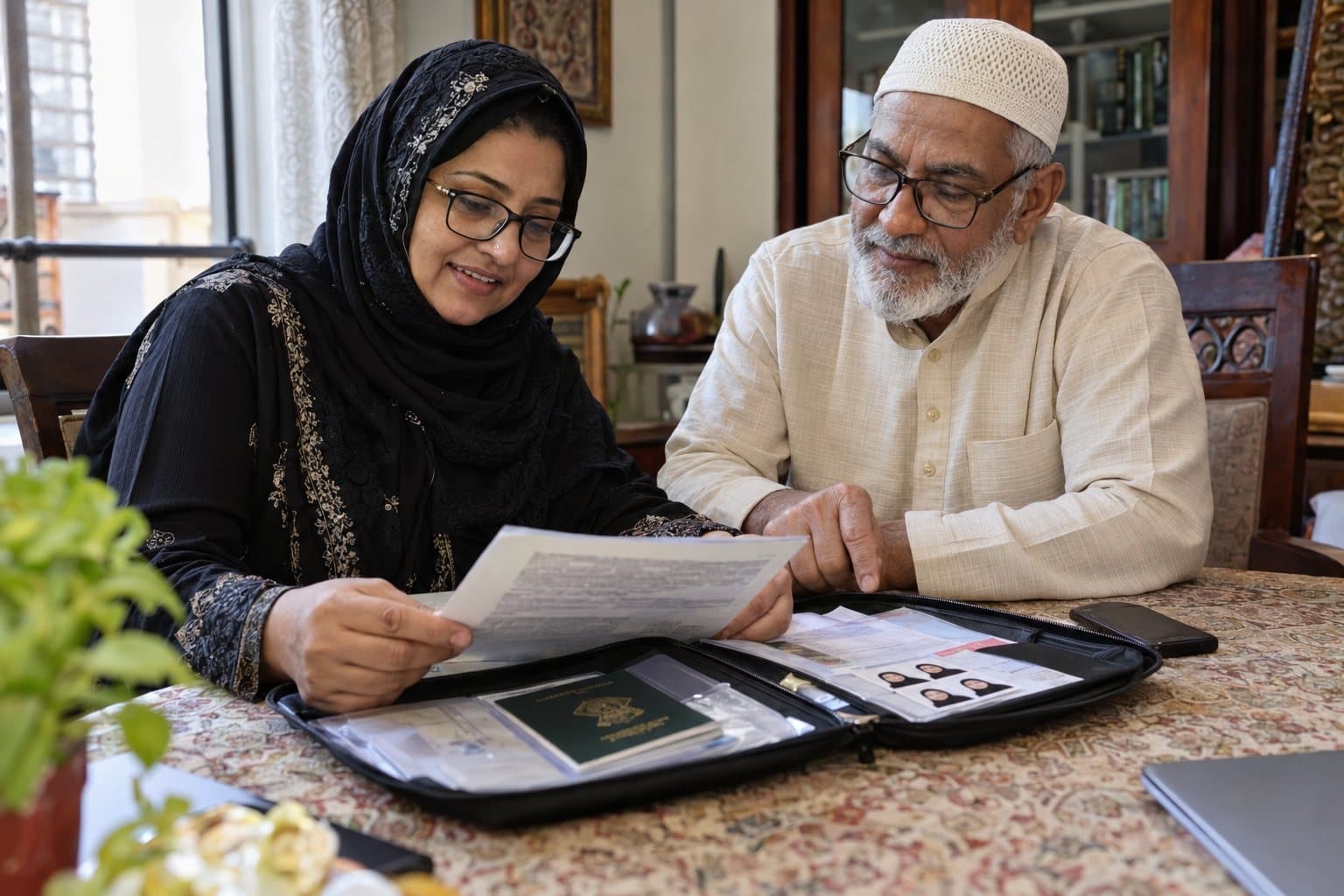
Pack every regular medicine for the whole trip, plus a few extra days, in the cabin bag. If two family members are travelling with your parents, split the medicines between two bags, so one lost bag does not leave anyone without them.
Tick items as you go; they are saved on this device.
Some medicines, such as strong painkillers and sleeping tablets, are controlled in Saudi Arabia. If your parent takes any of these, ask the doctor for a letter and check the rules before you fly.
Choosing the package and the hotel
Our 15-day and 20-day group packages both include 5 nights in Madinah. The 20-day package adds five more nights in Makkah, which gives parents rest days between visits to the Haram. Most families with elderly parents find 20 days easier.
In both packages, the Makkah hotel is about 650 m from the Haram, about 8 to 10 minutes on foot for a healthy adult. The Madinah hotel is about 200 m from Masjid an-Nabawi, about 3 minutes on foot. Parents may take longer, so plan for that.
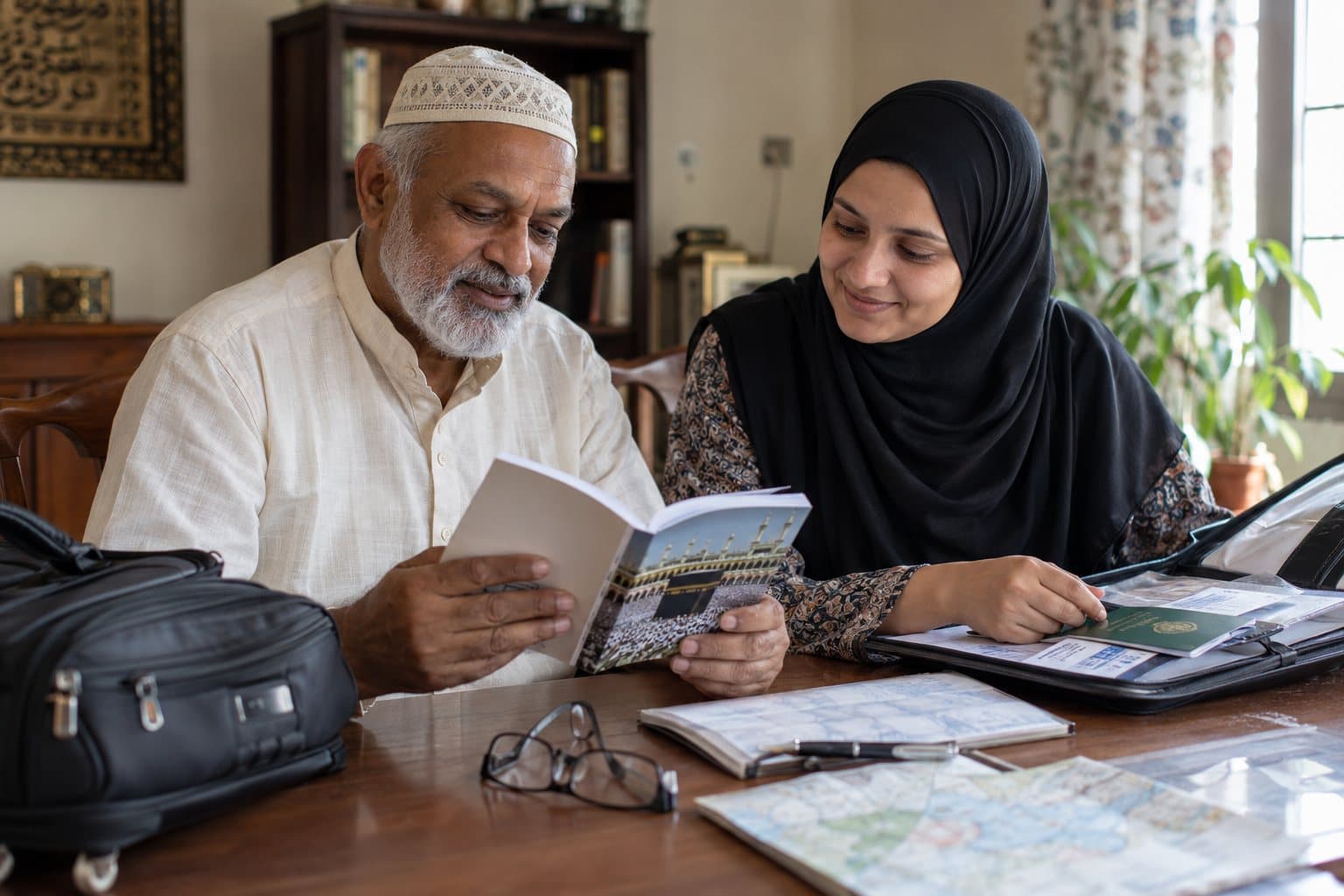
If you want a hotel closer to the Haram, a family room with lift access or your own dates, a private or family Umrah can be planned around your parents. Before you book either, ask:
- Is the walk to the Haram flat, or is there a slope or a busy road to cross?
- Does the hotel have a lift, and how busy is it at prayer times?
- Can parents have a room near the lift, on a lower floor?
- Does the bathroom have a high step or a slippery floor?
- How many people share the room? Double, triple and quad rooms are available at a different price.
Tell us early about wheelchairs, lift access, less walking or medical needs, so hotels and transport can be planned around them.
Wheelchair help at the airport
Airlines give wheelchair help at the airport: from check-in to the aircraft, and from the aircraft to the exit on arrival. It has to be requested in advance. Ask for it even if your parent can walk short distances, because airport walks are long.
- 1
Step 1
Ask when you book
Tell us when you book that a parent needs a wheelchair at the airport, so it can be requested with the ticket. Ask for both the outward and the return flight.
- 2
Step 2
Check again before the flight
A few days before departure, check that the request is still on the booking.
- 3
Step 3
At Mumbai airport
Reach early and remind the airline staff at check-in. A staff member takes your parent through security and immigration, and one family member usually goes along.
- 4
Step 4
On landing in Jeddah
Stay seated until the crew says the wheelchair is ready. Stay with your parent through immigration and baggage, and keep your group leader informed.
- 5
Step 5
On the coach to Makkah
Help your parent to a seat near the front and the door. Keep water, medicines and a shawl in the cabin bag for the road.
If your parent uses their own folding wheelchair, tell the airline before the flight. Airlines have a process for carrying it, but they need to know in advance.
Wheelchairs and carts in the Haram
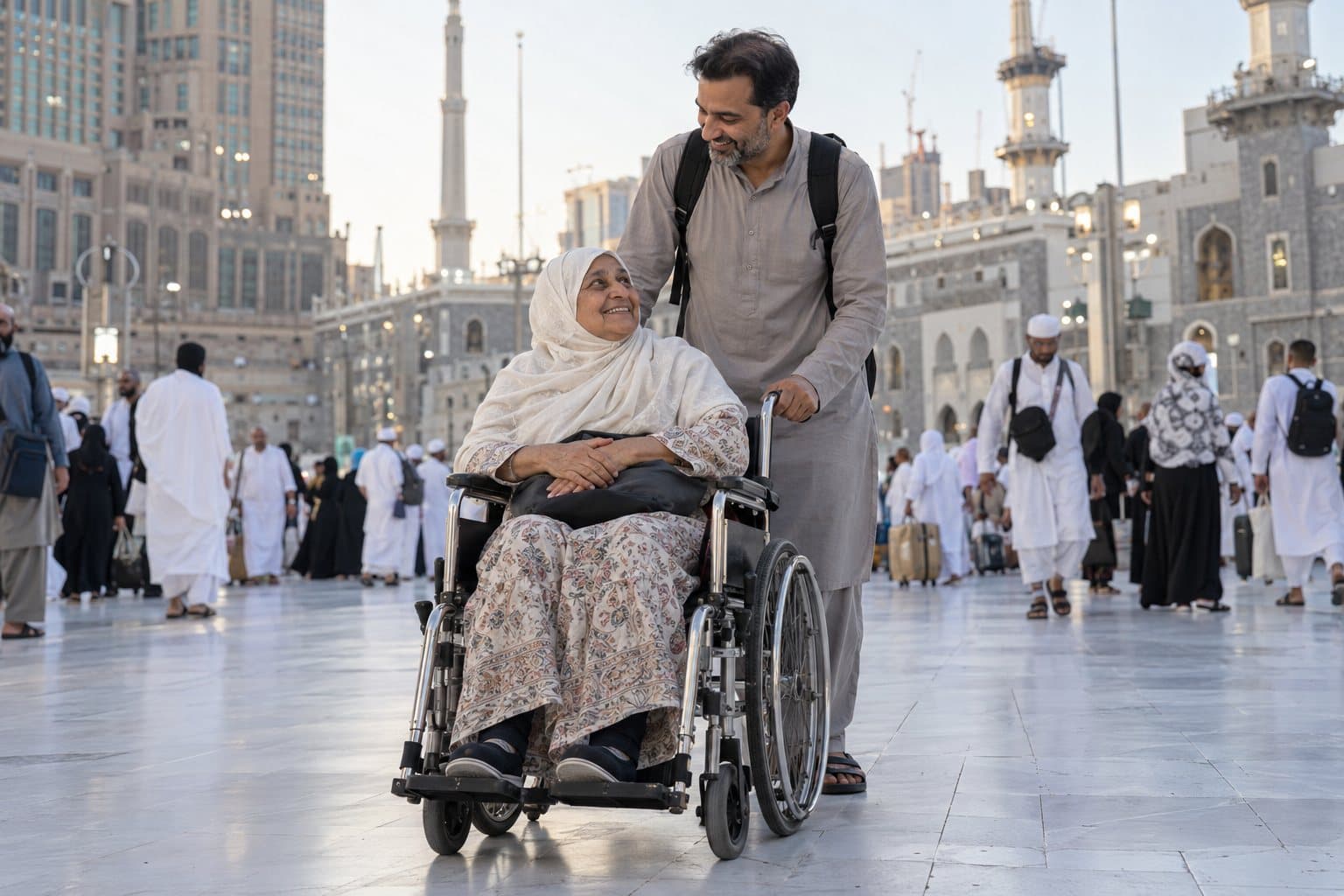
Many elderly pilgrims perform tawaf and sa’i in a wheelchair. In Masjid al-Haram there are wheelchairs, electric carts and paid helpers who push wheelchairs. How these services work, where you collect them and what they cost change from time to time, so check on arrival. Your group leader can show you where to go.
A few facts help with planning:
- Sa’i is seven lengths between Safa and Marwah, roughly 3 km in all. The floor is flat, and many parents use a wheelchair for sa’i even if they walked the tawaf.
- Tawaf close to the Kaaba is the shortest route but the most crowded. The upper floors are calmer, but each round is much longer.
- There are wheelchair lanes, and elders can use the upper floors for tawaf.
- Tawaf soon after Fajr is usually calmer than at other times.
Some questions are religious, not practical: for example, doing a rite seated, or asking someone to perform a rite on a parent’s behalf. Please ask a qualified scholar about these before you travel.
A gentle daily pace
The first days are the hardest. In our group itinerary, the Umrah is performed on day 2, after rest, and day 3 is a gentle day to recover from the journey. After that, let your parents set the pace.
Many parents go to the Haram for one or two prayers a day and pray the rest at the hotel, saving their strength for the times that matter most to them. Ziyarat days include time on the road and some walking. A tired parent can stay back and rest.
- Leave for the Haram early, so you are not rushing through crowds before the adhan
- Jumu’ah fills up early: leave well before the adhan
- Rest in the afternoon, especially in the hot months
- Think about the walk back to the hotel before starting an extra tawaf
Heat, water and food
Older people often feel heat and thirst late. Do not wait for your parent to ask for water.
- Give water or Zamzam often, and more in the hot months; there are Zamzam coolers all over the Haram
- Use an umbrella, and avoid walking outside at midday
- Keep ORS sachets in the day bag
- Carry a small snack for diabetic parents, as meal times and prayer times do not always line up
- Watch for dizziness, headache, unusual tiredness, confusion or very little urine. Move your parent to a cool place, give water and get medical help.
The hotel serves an Indian buffet for breakfast, lunch and dinner. Tell us early about any medical diet. If your parent feels unwell, there are medical points in and around both Harams.
Who stays with them
The most important plan is simple: one fit family member is responsible for each elderly parent, every time they leave the hotel. Decide this at home, not in the crowd.
In Masjid an-Nabawi, men and women use separate gates and prayer areas, and in Masjid al-Haram they pray in separate areas too. If your mother needs help, a woman from the family should go with her.
Tick items as you go; they are saved on this device.
If a parent gets separated, they should stay at the agreed gate and wait, not walk around looking for you. Practise this once on the first day.
Questions
Yes. Many elderly pilgrims perform Umrah using a wheelchair for tawaf and sa’i. Book airport wheelchair help in advance, choose a hotel with lift access, and ask a qualified scholar how the rites apply to your parent.
Related on our site
Official guidance
This guide is general travel information. For religious rulings, please ask a qualified scholar.