
On this page
Key points
- Hajj is one of the five pillars of Islam, obligatory once in a lifetime for every adult Muslim who is able. Umrah is not one of the five pillars.
- Hajj is done only on fixed days, 8 to 13 Dhul Hijjah. Umrah can be done at most times of the year.
- Umrah has four main parts: ihram, tawaf, sa’i and cutting the hair. Hajj adds Mina, Arafat, Muzdalifah, the Jamarat and more.
- From India, an Umrah trip usually takes 15 to 20 days. A Hajj trip runs from about 17 days to six weeks and costs several times more.
Hajj vs Umrah in short
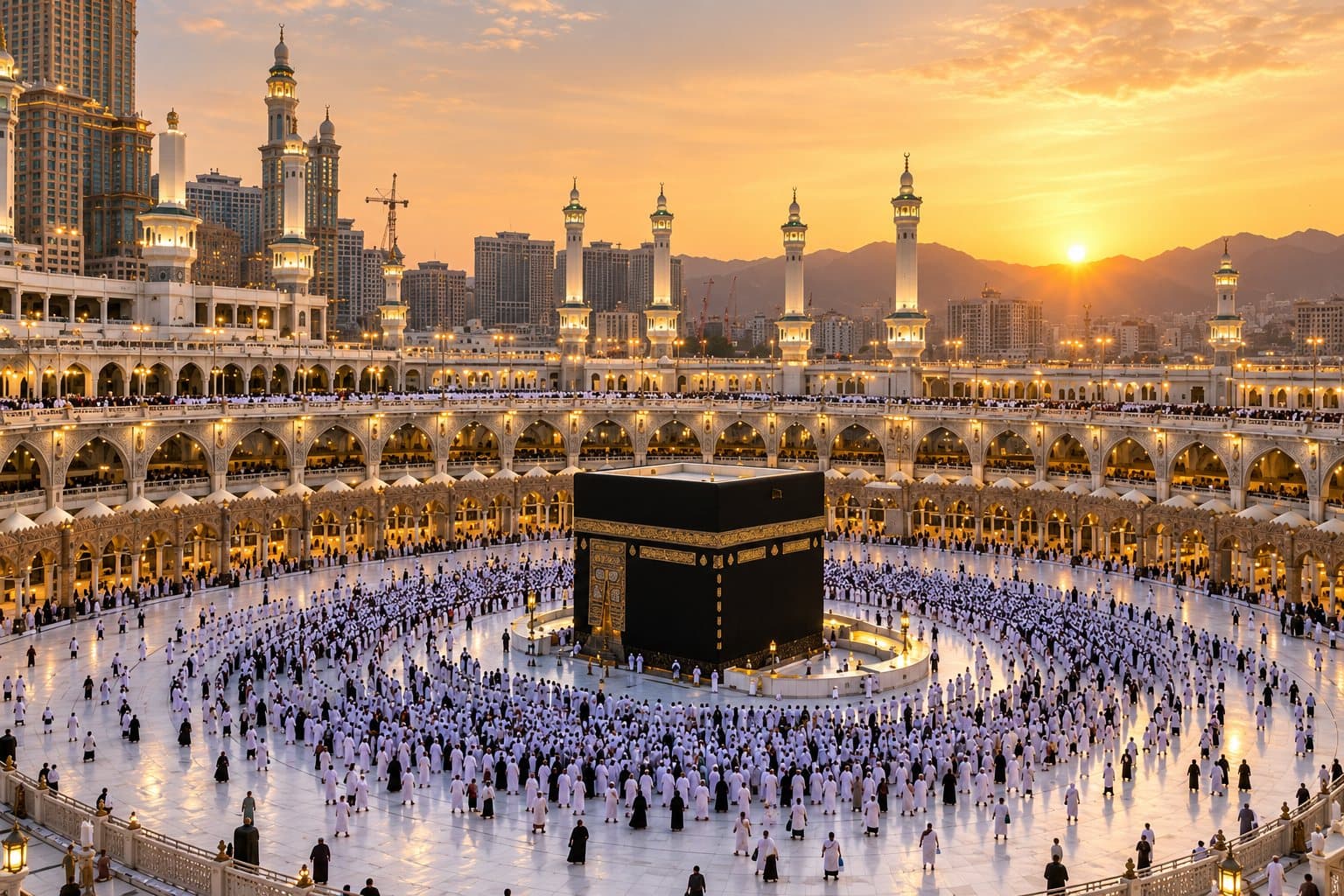
Hajj is the obligatory pilgrimage to Makkah, done once a year on fixed days. Umrah is a shorter pilgrimage that can be done at most times of the year. Both start in ihram and include tawaf of the Kaaba and sa’i between Safa and Marwah, but only Hajj includes the days at Mina, Arafat and Muzdalifah.
Is Hajj or Umrah obligatory?
Hajj is obligatory once in a lifetime for those who can afford it and are able to travel. Umrah is not a pillar of Islam.
- Hajj: fard once in a lifetime for every adult Muslim who has the health and the means.
- Umrah: scholars differ. Many hold it to be a strongly recommended Sunnah; others hold it to be obligatory once in a lifetime.
- An Umrah, however many times it is done, does not take the place of Hajj.
Ask your own scholar how this applies to you, especially if you are deciding which to do first.
When each is done
Hajj has fixed dates; Umrah does not.
- Hajj: only from 8 to 13 Dhul Hijjah. In 2027, the Day of Arafah is expected around 15 May, subject to the sighting of the moon.
- Umrah: at most times of the year. Many families go in the winter holidays or in Ramzan.
- Saudi Arabia closes the Umrah season for foreign pilgrims around Hajj. As reported, for the current season the last Umrah visa is issued on 9 March 2027 and the last entry is on 23 March 2027. Umrah reopens after Hajj.
The rites compared
Umrah’s rites are also part of Hajj. Hajj then adds several more days of rites.
- Ihram: both
- Tawaf of the Kaaba: both
- Sa’i between Safa and Marwah: both
- Shaving or cutting the hair (halq or taqsir): both
- Days in Mina, the standing at Arafat and the night at Muzdalifah: Hajj only. Standing at Arafat is the heart of Hajj.
- Rami (stoning) at the Jamarat: Hajj only
- Qurbani (sacrifice): Hajj, for those doing Tamattu or Qiran
- Tawaf al-Ifadah: Hajj only
Most pilgrims from India do Hajj al-Tamattu: an Umrah first, then Hajj in the same trip.
How long each takes
The rites of Umrah take a few hours. The rites of Hajj take five to six days.
- Umrah trip from India: usually 15 to 20 days, with time in Makkah and Madinah.
- Hajj through the Haj Committee: usually 40 to 45 days, or 20 days on its Short Haj.
- Private Hajj: about 17 days to six weeks, depending on the package.
Cost from India
Hajj costs several times more than Umrah, because of the Hajj days, the season and the longer stay.
- Umrah: our 15-day group package from Mumbai is ₹89,999 and our 20-day package is ₹99,999 per person, on 5-bed average sharing. GST and TCS extra as applicable.
- Hajj through the Haj Committee: as reported, about ₹3.5 lakh per pilgrim from Mumbai for Haj 2026.
- Private Hajj: higher than the Haj Committee. Our Hajj 2027 rates are shared on call.
Visa and permits
Umrah and Hajj need different visas. A Hajj cannot be done on an Umrah or tourist visa.
- Umrah: an Umrah visa, with Umrah bookings and permits made through the Nusuk system. As reported, some other Saudi visas, such as the tourist visa, also allow Umrah outside the Hajj period.
- Hajj: only under India’s Hajj quota, through the Haj Committee of India or an approved private Hajj Group Organiser (HGO).
- Hajj arrangements are tentative and subject to Saudi and Indian government policy and approvals.
Questions
Hajj is obligatory once in a lifetime and is done only on 8 to 13 Dhul Hijjah. Umrah is shorter, can be done at most times of the year, and has four main parts: ihram, tawaf, sa’i and cutting the hair.
Related on our site
Official guidance
This guide is general travel information. For religious rulings, please ask a qualified scholar.