
On this page
Key points
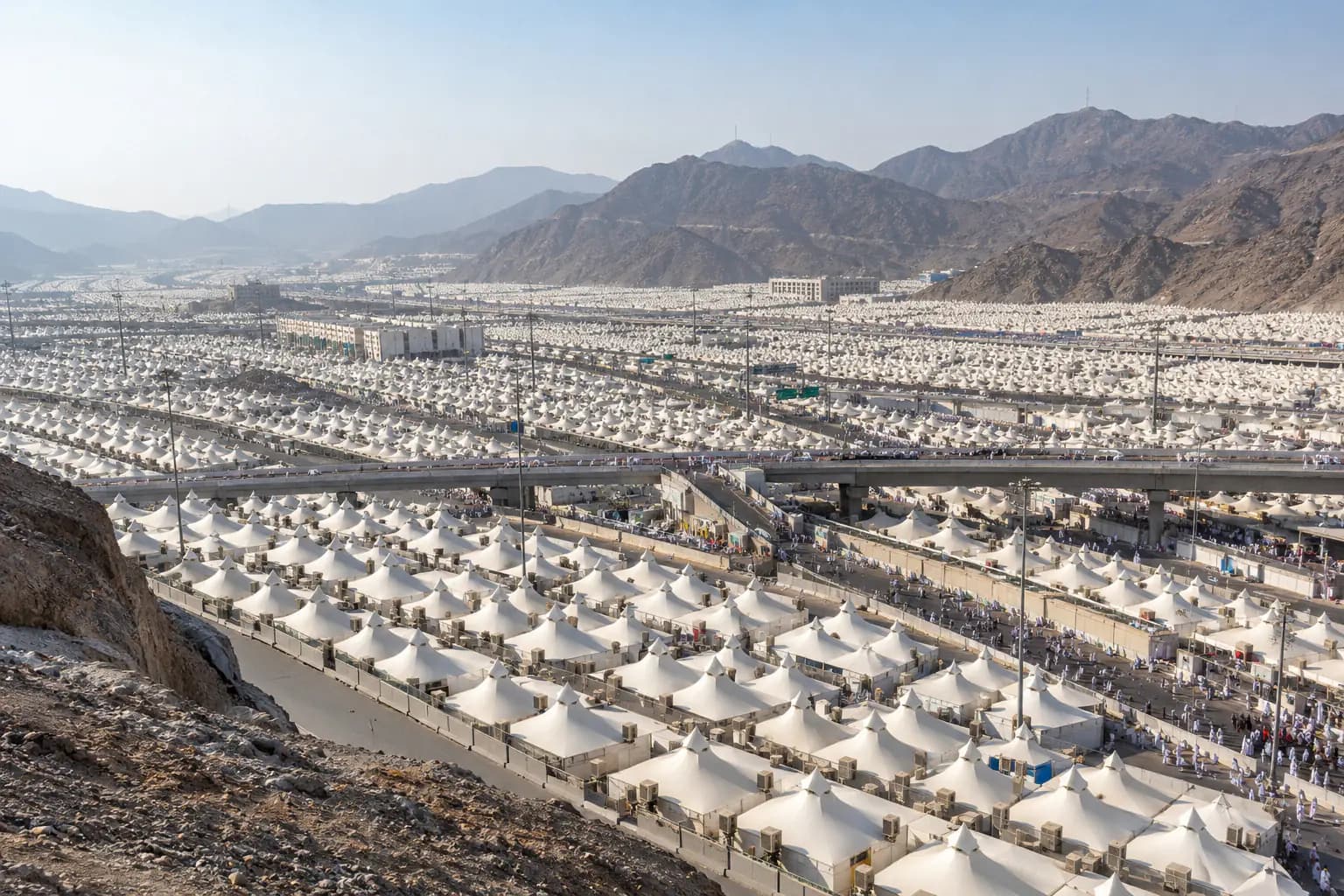
- Mina is a valley about 5 to 7 km east of Masjid al-Haram, filled with fireproof white tents that stand empty most of the year.
- Pilgrims stay in Mina on 8 Dhul Hijjah, then return after Muzdalifah for the days of 10, 11, 12 and, for some, 13 Dhul Hijjah.
- The stoning of the Jamarat happens in Mina, so most of the days are built around it.
- Tents are shared, simple and crowded. Patience, water and staying with your group matter more than anything you pack.
What Mina is
Mina is a wide valley between Makkah and Muzdalifah, with mountains on both sides. For most of the year it is quiet. During Hajj it becomes a city of tents for more than a million people, each group in its own fenced camp with a number and a flag or board at the gate.
The Prophet ﷺ stayed in Mina on his Farewell Hajj, prayed there, and stoned the Jamarat from there (Muslim 1218). Allah says, “Remember Allah during the appointed days” (2:203): these are the days spent in Mina.
Your days in Mina
- 1
Step 1
8 Dhul Hijjah (Yawm at-Tarwiyah)
Pilgrims put on ihram (for Tamattu) and go to Mina. Pray Dhuhr, Asr, Maghrib, Isha and the next Fajr there, each at its time, shortening the four-rak’ah prayers.
- 2
Step 2
9 Dhul Hijjah
After sunrise, leave for Arafat. The night after is spent in Muzdalifah.
- 3
Step 3
10 Dhul Hijjah (Eid)
Return to Mina, stone Jamrat al-Aqabah, then the sacrifice, shaving or cutting the hair, and tawaf al-ifadah, which can also be done on a later day.
- 4
Step 4
11 and 12 Dhul Hijjah
Stay the nights in Mina and stone all three Jamarat each day after midday. Pilgrims who wish may leave Mina on the 12th before sunset.
- 5
Step 5
13 Dhul Hijjah
Those who stay on stone the three Jamarat once more and then leave. The Qur’an allows both choices (2:203).
Some private groups move pilgrims to Mina late on the 7th to avoid the traffic. Your group will tell you its own timings.
Tents, toilets and food
- Tents are air-conditioned and shared, usually by people of the same group, with men and women in separate tents or separated areas
- Each pilgrim gets a narrow space with a mattress or a sofa-bed, depending on the camp category. Space is tight, so keep your bag small
- Toilets and wudu areas are shared by the camp. There are queues before prayer times, so go a little early
- Meals are served in the camp by the group’s caterer. Keep dates, biscuits and an empty bottle for water in your bag
- Camp facilities and categories change from year to year, so treat any description as a guide, not a promise
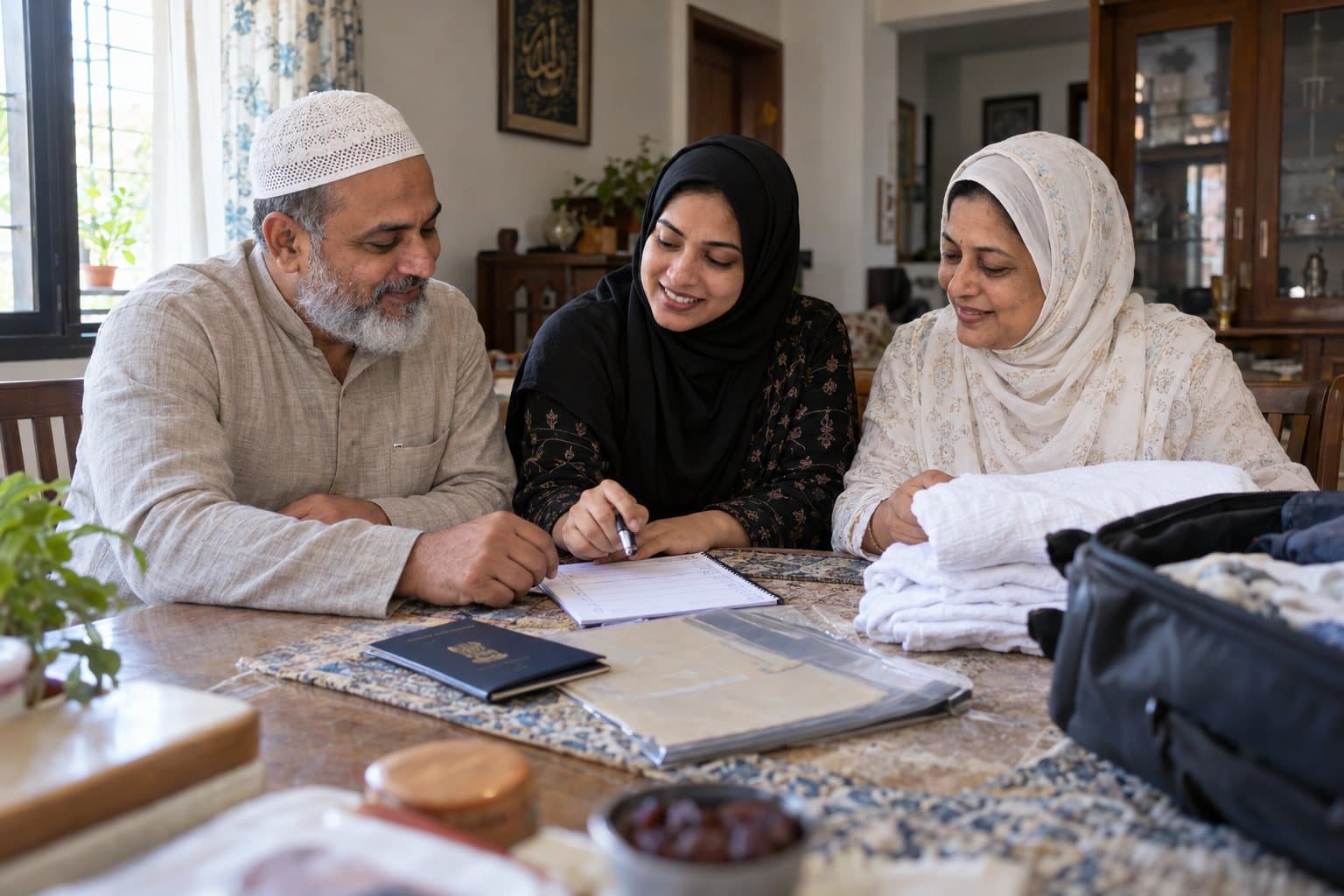
 Illustrative image
Staying with your group
- Learn your camp number, street number and the nearest landmark on the first day, and keep them written on a card in your pocket
- Keep the Nusuk card or the camp card your group gives you around your neck at all times
- Save your group leader’s number and put your phone on low-power mode; signals can be weak in crowds
- If you get lost, go to the nearest official help point or scout tent and show your card. Do not walk around looking for the camp alone
Coping with the heat
Hajj 2027 is expected in mid-May, when Mina is very hot during the day. The walks to the Jamarat and back can be long. Carry an umbrella, drink water often in small amounts, and rest in the tent in the hottest hours.
Older pilgrims should plan the Jamarat walk at a cooler time where the rulings allow, and use the help their group arranges. Signs of heat exhaustion, such as dizziness or confusion, need medical help at once.
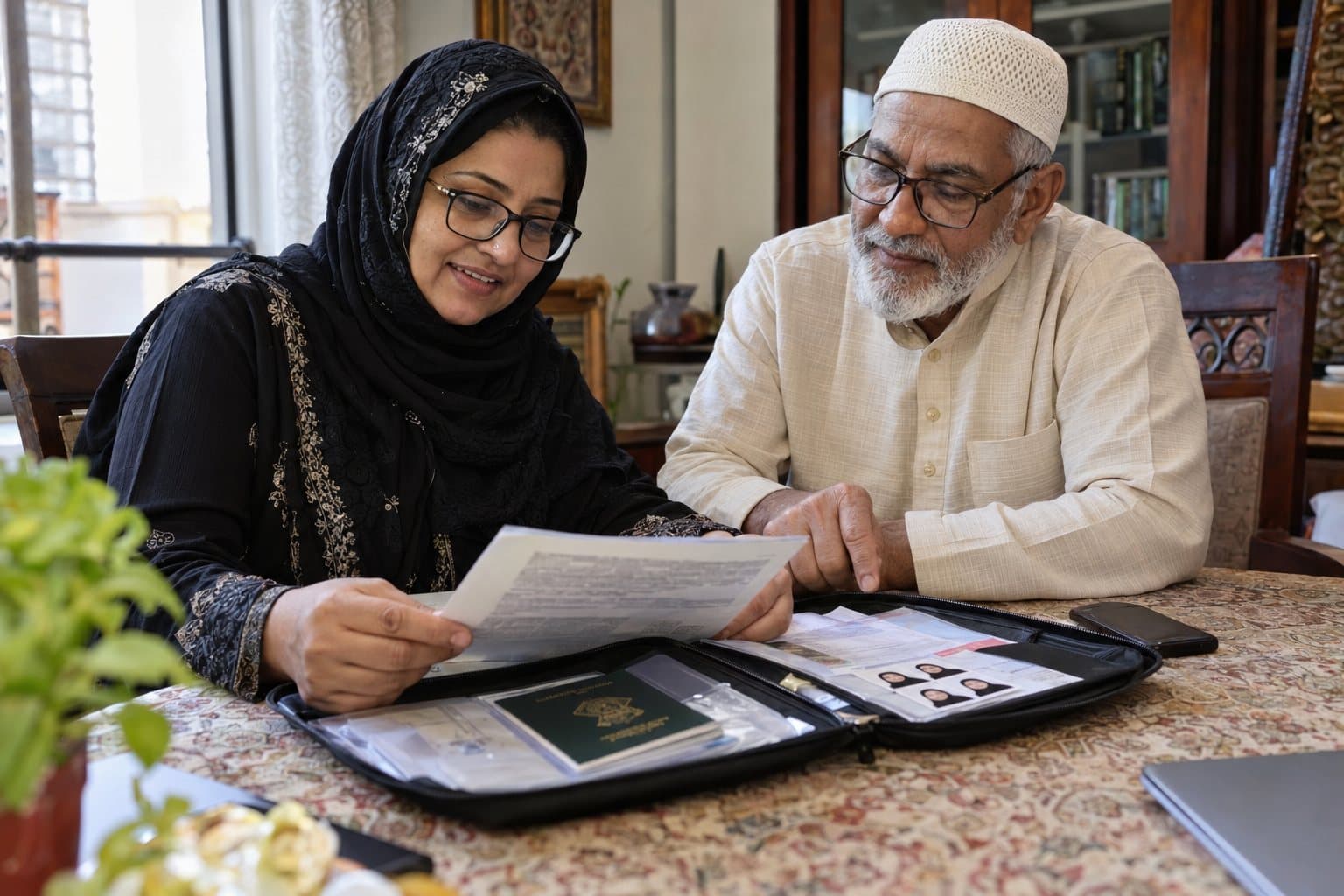
 Illustrative image
Getting around Mina
Mina, Muzdalifah and Arafat are joined by walkways, roads and the Mashaer train. Which pilgrims can use the train, and from which station, is decided each year by the Saudi authorities and depends on the camp. Your group will tell you whether you travel by train, by bus or on foot.
Distances inside Mina are bigger than they look. From many camps the walk to the Jamarat is 2 to 4 km each way, so wear soft, broken-in sandals.
Questions
Mina is a valley about 5 to 7 km east of Masjid al-Haram in Makkah, on the way to Muzdalifah and Arafat.
Related on our site
Official guidance
This guide is general travel information. For religious rulings, please ask a qualified scholar.