
On this page
Key points
- There are three Jamarat in Mina: the small (Ula), the middle (Wusta) and Jamrat al-Aqabah. Today each is a long wall inside a multi-floor bridge.
- On 10 Dhul Hijjah stone only Jamrat al-Aqabah, with seven pebbles. On the 11th, 12th and (if you stay) 13th stone all three, in order, after midday.
- Say “Allahu akbar” with each pebble. Pebbles are small, about the size of a chickpea.
- Go at the time your group is given, keep your bag small, and never push. The weak and elderly may appoint someone to stone for them.
What the Jamarat are
The Jamarat are three places in Mina where pilgrims throw small pebbles, following the Prophet ﷺ. Many scholars link them to Ibrahim (AS), who rejected Shaytan’s whispers there. The stoning is an act of obedience and remembrance of Allah, not anger at a stone.
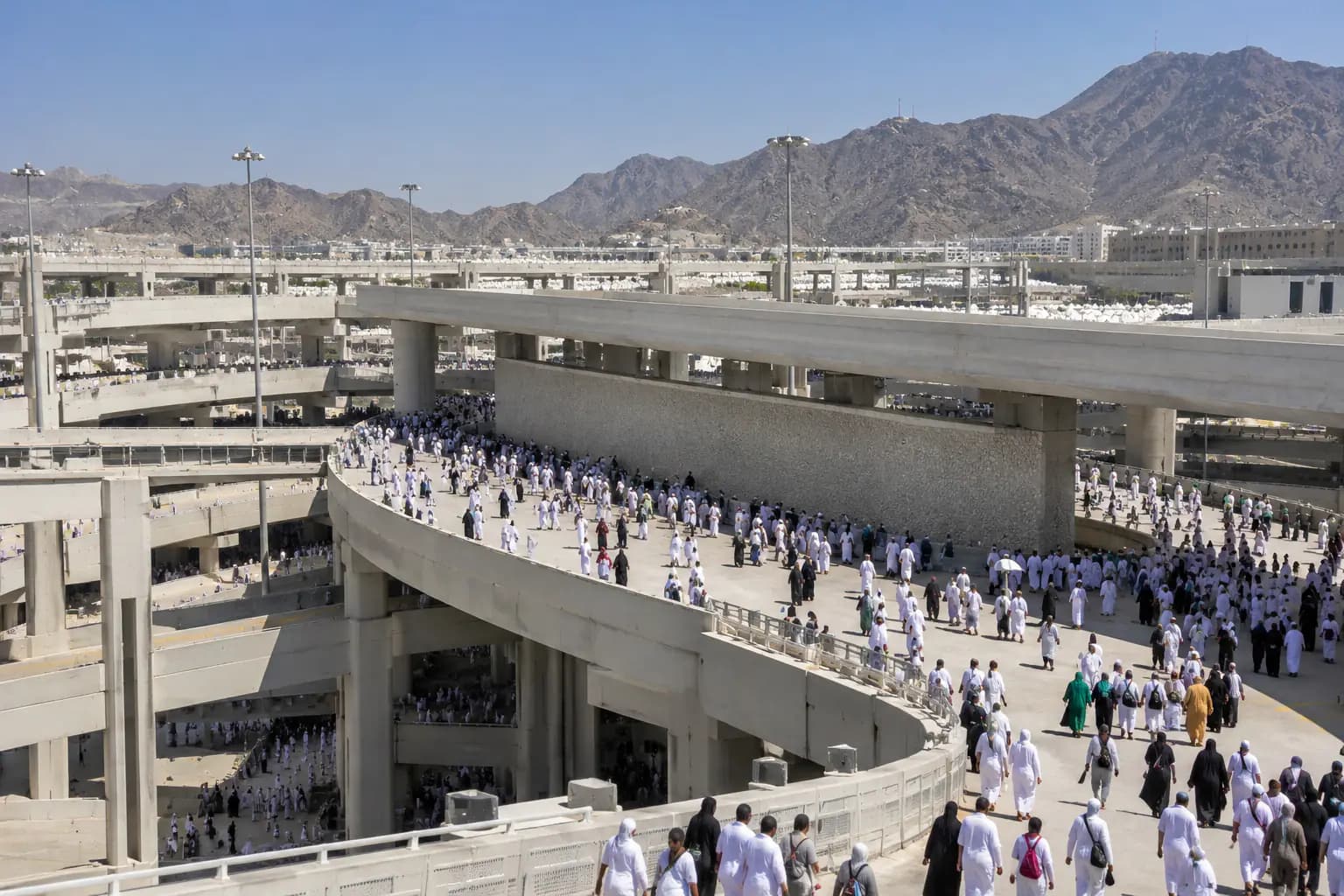
Today the three pillars are long, tall walls with a basin around them, inside the Jamarat bridge: a building of several floors with wide ramps, one-way walkways and entrances from different sides. Each camp is usually given a floor and a time.
10 Dhul Hijjah: Jamrat al-Aqabah only
- 1
Step 1
Come from Muzdalifah
Reach Mina in the morning. Stop the talbiyah when you throw your first pebble.
- 2
Step 2
Stone Jamrat al-Aqabah
Throw seven pebbles, one at a time, saying “Allahu akbar” with each, as the Prophet ﷺ did (Muslim 1218). The pebble must land in the basin.
- 3
Step 3
Then the other rites of the day
The sacrifice, shaving or cutting the hair, and tawaf al-ifadah follow. Your group will tell you its order and timing.
11, 12 and 13 Dhul Hijjah: all three
- 1
Step 1
After midday
On these days the stoning starts after the sun passes its highest point. Groups are given times to spread the crowd.
- 2
Step 2
First: the small Jamrah
Seven pebbles with takbir. Then step aside, face the qiblah, raise your hands and make a long du’a (Bukhari 1751).
- 3
Step 3
Second: the middle Jamrah
Seven pebbles with takbir, then again step aside and make du’a.
- 4
Step 4
Third: Jamrat al-Aqabah
Seven pebbles with takbir. Leave without stopping for du’a here, as the Prophet ﷺ did.
The schools differ on the earliest time on the 12th and 13th and on stoning at night. Follow your group’s scholar and the official schedule.
The pebbles
- Small, about the size of a chickpea or a date stone. The Prophet ﷺ said “like these”, and warned against going to extremes (Nasa’i 3057)
- Do not throw big stones, shoes, umbrellas or bottles. It is wrong and it hurts people
- Count carefully: 7 on the 10th, then 21 on each of the following days
- If a pebble misses the basin, throw another one in its place
 Illustrative image
Stoning for the elderly and the weak
Scholars agree that a pilgrim who cannot do the rami, because of old age, illness or weakness, may appoint another pilgrim to do it for them. The helper must be on Hajj too, and usually throws his own pebbles first and then the pebbles for the other person, at each Jamrah.
Healthy pilgrims should do their own rami. If your parent is unsure whether they qualify, ask the group’s scholar before the day.
Staying safe at the Jamarat
- Go at the time your camp is given. The schedule exists because crowds at the wrong time can be dangerous
- Leave big bags in the tent. Keep both hands free and the pebbles in a small pouch
- Walk with the flow of people and never stop or bend down in the crowd to pick something up
- Stay with a partner, and agree on a meeting point outside the bridge in case you are separated
Questions
49 if you leave Mina on the 12th (7 + 21 + 21), or 70 if you stay for the 13th (7 + 21 + 21 + 21).
Related on our site
Official guidance
- Sahih Muslim 1218: the Prophet’s ﷺ stoning of Jamrat al-Aqabah
- Sahih al-Bukhari 1751: the order of the three Jamarat and du’a after the first two
- Sahih al-Bukhari 1753: takbir with each pebble
- Sahih Muslim 1299: stoning with small pebbles
- Sunan an-Nasa’i 3057: pebbles “like these”, and beware of going to extremes
- Qur’an 2:203: the appointed days in Mina
This guide is general travel information. For religious rulings, please ask a qualified scholar.